
Netherlands approves funds to implement a Climate & Food Security programme in Kenya, Tanzania and Uganda
2 min read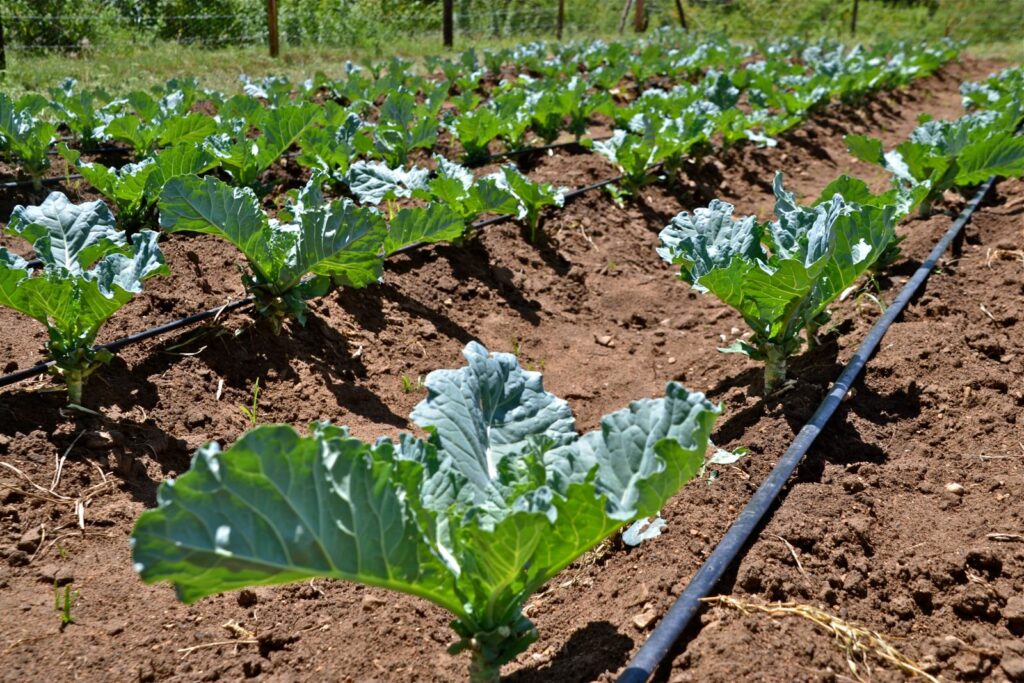
Kales farming under drip irrigation system. Climate change threatens crop yieds in Africa and harvest losses may add up to 20 fold the investment costs of adapting agricultural practices. Photo: C. SCHUBERT (CCAFS).
The Netherlands Ministry of Foreign Affairs has granted funding of €39.5 million (about Sh4.7bn) to implement a five-year Climate Smart Agriculture programme in Kenya, Tanzania and Uganda to a consortium led by SNV Netherlands Development Organisation, in partnership with Wageningen University and Research, CGIAR’s Climate Change Agriculture and Food Security Programme, Agriterra, and Rabo Partnerships.
This initiative will significantly contribute to The Netherlands’ international commitments on climate change.
RELATED NEWS: USAID funds automated air drier to boost factory’s processing capacity
Objective
Climate change being a threat to crop yields in Africa, and harvest losses may add up to 20 fold the investment costs of adapting agricultural practices now the programme aims to increase food production and food security by enhancing climate resilience throughout the supply chain.
By 2022 the programme will result in adaptive productive capacity and increased incomes for 300,000 medium sized and smallholder producers. On top of that there will be improved business performance of 50 small medium enterprises and 30 cooperatives to mitigate the risks of climate change on their supply chains.
“This grant will help us scale up our support to farmer communities to feed their families and increase their income. This will require adapting the way they farm to more frequent drought and other climate-related changes” said Meike van Ginneken, CEO of SNV.
RELATED NEWS: Continental competition entices youth with Sh2million grant
Scaling to systemic change
The programme uses a three-pronged approach: implementing complementary interventions to increase adoption of climate-smart practices and technologies among farmers and SMEs, stimulating their growth throughout the value chain by enhancing private sector investments in climate adaptation and advocating with partners and the government of the three targeted countries to encourage a favorable enabling environment for large-scale market adoption.
“We collaborate with private and financial sector partners such as Rabobank – who will pave the way for financially viable Climate Smart Agriculture solutions and investment to agribusinesses,” said Ginneken.
Dutch expertise in sustainable food production systems, particularly in potatoes, oilseeds, and pulses will be mobilized.
RELATED NEWS: Fresh produce supplier receives $100,000 grant from global social impact programme Expo Live to grow farmers’ reach


A project proposal for a “Solar Village for Regenerative Agriculture” is outline on a comprehensive plan to integrate solar energy solutions with sustainable farming practices to improve rural livelihoods, enhance food security, and promote environmental sustainability in 9,500 farmers in Turkana county in Kenya .
Project Proposal Outline
1. Executive Summary
The Problem: Turkana Rural communities lack reliable, affordable energy access, hindering agricultural productivity and relying on environmentally damaging energy sources. Conventional agriculture practices lead to soil degradation and are vulnerable to climate change impacts.
The Solution: Establish a “solar village” where a community solar microgrid powers homes and agricultural operations (irrigation, cold storage, processing). Simultaneously, train farmers in regenerative agriculture techniques (cover cropping, no-till farming, agroforestry) to restore soil health and build climate resilience.
Expected Impact: Increased crop yields, reduced operational costs for farmers, improved quality of life, reduced greenhouse gas emissions, and a replicable model for sustainable rural development.
2. Background and Context
Describe the target This project will target two main River namely River Kerio and Turkwel river with 3000 village, its current energy situation (e.g., reliance on kerosene, diesel), and prevailing agricultural practices.
Highlight the specific challenges faced, such as erratic weather patterns, soil degradation, or limited market access, that this integrated approach will address.
We will integrate 1300 solar and regenerative agriculture approach.
3. Project Goal and Objectives
Goal: To establish a self-sufficient and sustainable “solar village” that serves as a model for the integration of renewable energy and regenerative agriculture practices.
Objectives:
To install a community solar power system (e.g., microgrid or individual household systems) to provide reliable electricity for all village needs, including agricultural operations.
To train local farmers in key regenerative agriculture techniques to improve soil health, water retention, and crop yields.
To enhance agricultural productivity and income generation through solar-powered infrastructure (e.g., irrigation pumps, post-harvest processing, and cold storage facilities).
To build local capacity for the operation, maintenance, and repair of all installed systems.
4. Project Activities and Implementation Plan
The project will be implemented over a proposed timeline (e.g., 24 months) in phases:
Phase 1: Needs Assessment and Planning (Months 1-3):
Conduct comprehensive needs assessments and baseline studies to understand specific energy and agricultural needs.
Engage with community leaders and members to ensure community buy-in and participation.
Design the solar power systems and tailor agricultural training programs to local needs.
Phase 2: Procurement and Installation (Months 4-12):
Procure solar panels, pumps, storage units, and other necessary equipment.
Install the solar energy systems and associated agricultural infrastructure.
Use local labor whenever possible to foster community involvement and job creation.
Phase 3: Training and Capacity Building (Months 10-18):
Conduct hands-on training sessions for farmers on using solar-powered equipment and implementing regenerative farming practices.
Train a network of local technicians on maintenance and repair of solar equipment.
Establish local cooperatives or associations to manage the systems.
Phase 4: Monitoring, Evaluation, and Upscaling (Months 19-24+):
Regularly monitor performance using agreed-upon indicators (e.g., energy generated, crop yield increase, farmer income levels).
Gather feedback through surveys and focus groups for ongoing adjustments.
Document lessons learned to create a replicable model for other regions.
5. Budget and Resources
Provide a detailed budget breakdown for all project components (equipment, installation, training, M&E, administration).
Identify potential funding sources (grants, private donors, government, crowdfunding).
Outline a financial plan for long-term sustainability, possibly including a nominal fee for energy usage or access to services for ongoing maintenance costs.
6. Sustainability and Long-Term Impact
Detail the plan for long-term project viability beyond the initial implementation, such as the establishment of a community-managed fund or cooperative.
Discuss the expected long-term impacts on the community’s economic growth, environmental health (carbon sequestration, soil health), and social well-being.
Emphasize partnerships with local governments and organizations to ensure alignment with broader development goals.
Thank you for this, Elodie. We are shortly opening a new section on projects for funding and will post this for you