Nakuru farmer triples milk with sugar beet feed
4 min read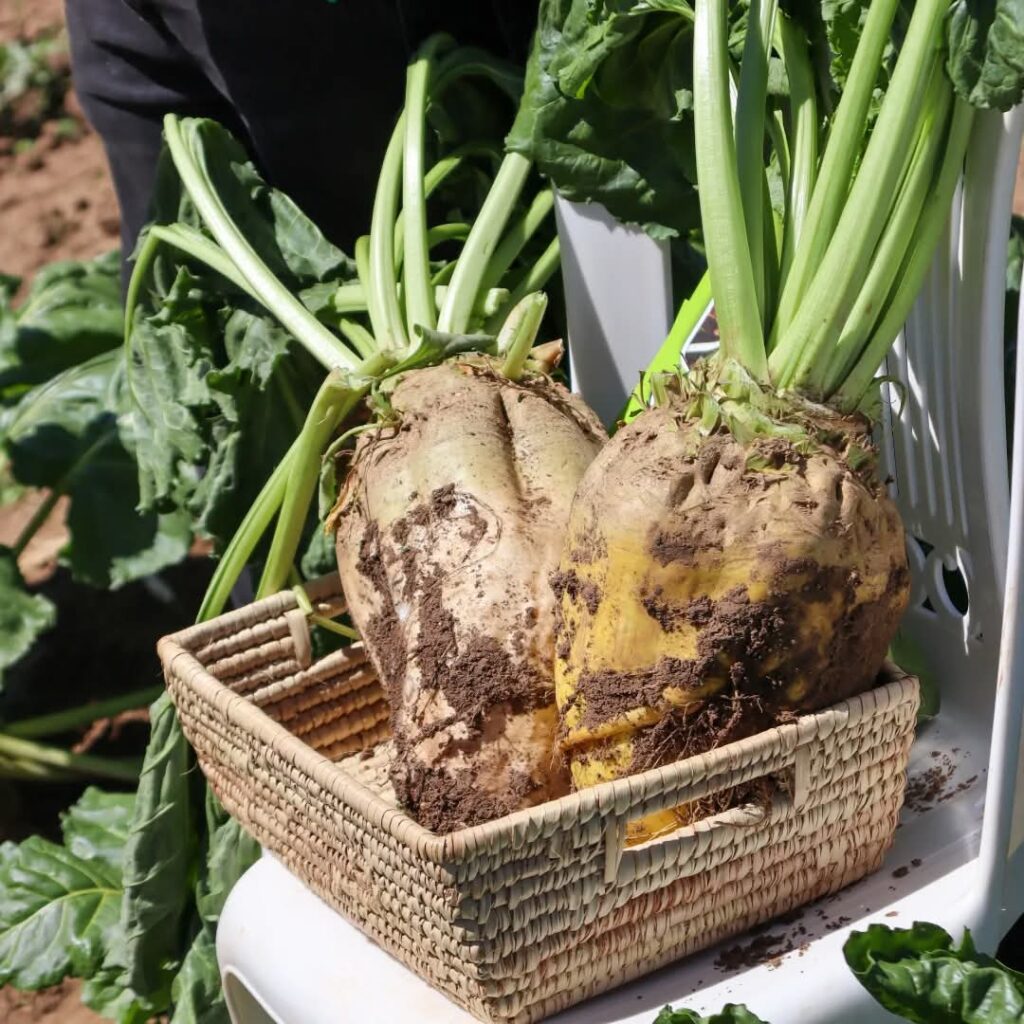
By Francis Ndungu
Nakuru farmer John Mwaura has more than tripled his cows’ milk production after switching to sugar beet feed, transforming his dairy output and income.
John, from Molo subcounty, said he first received sugar beet seedlings by chance from an East African Seeds trainer when he bought maize seeds.
“The seeds were given to me for trial purposes, and they later became very helpful to my cows,” he said.
At first, John did not know what the seedlings were. He chose to raise them in a nursery bed to improve germination.
“Sugar beets were unheard of, but now I am a witness of how it worked on my cows,” he said.
For years John reared only indigenous cattle because he could not afford commercial feeds.
“Today you might buy feeds at a certain amount, but after two weeks when you go back to the same shop, the price has already changed to a higher one. This really frustrated me,” he said.
Indigenous animals required little feed, but gave him just 4 litres of milk a day from one cow, while the rest were bulls. “I only gave them hay and that was all for the day as they fed themselves in the field,” he said.
When his sugar beets were ready, John sold five bulls and used the money to buy two Friesian cows—one expectant and the other lactating.
“The lactating cow was in poor health and produced only 2 litres of milk when I bought it,” he said. “But after two weeks of feeding it sugar beets and Napier grass, both its health and production improved. It started giving more than 8 litres a day.”
Related News:
Tropical sugarbeet: New crop opportunity for all counties
Pilot crop results trigger race for better sugar seeds for Kenya
How to grow sugar beets: Kenya’s potential answer to its sugar and fodder shortages
John said his first trial showed the crop required plenty of organic manure, but the results were promising, with each tuber weighing 3–5kg.
“I made a nursery bed two metres by five metres, dug deep to remove weeds and roots, sowed the seeds at 10cm spacing, mulched with dry grass and watered them regularly,” he said.
He transplanted 500 seedlings into the field, top-dressed them with CAN fertiliser, and watered them consistently. “Sugar beets are chopped before feeding, and they contain 17–20 per cent crude protein. Five kilos of sugar beets is equal to one kilo of dairy meal,” he said.
John said he adjusted feeding according to milk production: “The lower the production, the higher the feeding rate.”
After introducing sugar beet and Napier grass, milk production jumped.
“The indigenous cow increased from 4 litres to 6 litres per day. My Friesian rose from 5 litres to 14 litres per day. When the expectant cow gave birth, it started at 8 litres, then went to 14 litres, and later reached 18 litres per day after I increased sugar beets from five to eight daily,” he said.
At that time, milk sold at Sh50 per litre. “I was able to earn more than Sh1,100 per day, and later more than Sh3,000 per day. I was very happy since I could finally earn my own money without being employed,” he said.
To maintain high feed supply, John also planted super Napier and red Napier.
“I searched the two on social media and found that they had high crude proteins. Though the red Napier was expensive, at Sh50 per cutting, I did not hesitate to buy. I dug trenches, added organic manure, and it grew very fast,” he said.
He borrowed super Napier cuttings from neighbours and said both varieties performed well. “After three months the Napier was ready for cow feeding,” he said.
As a new dairy farmer, John frequently visited neighbours to learn.
“I had to seek advice from more farmers on cow management practices. I also met farmers who formulated their own feeds, which impressed me because it reduced costs. Learning from them was a good thing—it was free and practical,” he said.
He added that proper feeding became his focus: “I separate the feeding troughs so cows do not compete. That way I can tell if an animal is unwell, because it keeps off from the feeds.”
Challenges ahead
John said sugar beets are his best option as nothing goes to waste—even the leaves are edible.
“Chopping Napier into small pieces and mixing with chopped sugar beets together with molasses made the feeds very palatable to my cows. I also provide mineral salt to control deficiencies,” he said.
But fluctuating milk prices remain a big challenge.
“Milk price fluctuation keeps changing, sometimes going as low as Sh35 per litre. Middlemen exploit farmers here since they collect milk door to door. Some even disappear with farmers’ money or delay payments,” he said.
John said he prefers weekly payments to plan for his cows. Despite the challenges, he is determined to expand.
“I am aspiring to add more dairy cows and plant more sugar beets together with Napier to maintain high production,” he said.
Are you a farmer looking to grow the most profitable crop on your farm, with or without irrigation. Use FarmBizAfrica’s HarvestMAX on https://harvestmax.farmbizapps.com and it will tell you in less than a minute what the highest income-earning crops are for your weather, soil type and this season, based on your seasonal weather forecast. Don’t make weather losses ever again, and more than triple your income.