Amaranth: Dubius for 10x yield, Terere for taste
3 min read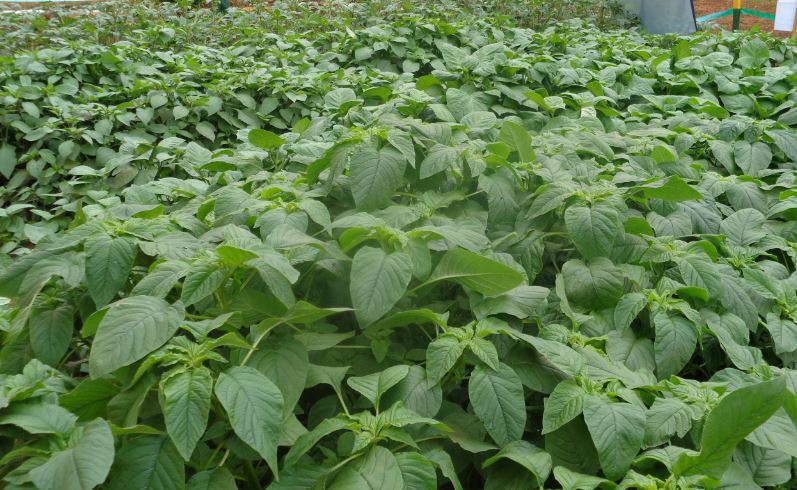
By Lizzie Owade
Kenyan farmers choosing amaranth seed have only two mainstream options – Amaranthus dubius and Amaranthus cruentus, also known as Terere – but one of the two outpaces the other by more than ten-fold in yield and harvest speed.
Amaranthus dubius, produced by Simlaw Seed Company and widely available through Agroduka and other suppliers, yields 7.5 to 12.5 tonnes an acre and is ready to harvest in just three to four weeks.
That compares with yields of 800 to 1,200 kilograms an acre for A. cruentus when uprooted at maturity, or 1.5 to 2 tonnes when grown for repeated offshoot harvesting, and a growing period of 40 to 120 days.
The Dubius variety is also resistant to some fungal diseases, grows across all ecological zones in Kenya, and flourishes in well-drained fertile soils with a pH of 4.5 to 8.0. It’s available from Simlaw at Sh245 for 100g, and from Agroduka at Sh130 for 50g.
In contrast, A. cruentus prefers slightly acidic soils and comes in at Sh50 for 10g from Simlaw and Sh130 for 50g from Agroduka.
Yet despite its lower productivity, Terere remains a popular choice, especially among traditional and rural consumers, based on its stronger taste and repeat harvesting without new planting.
Why choose Amaranthus dubius
- Speed: With a harvest window of 3 to 4 weeks, farmers can plant and sell multiple rounds a year.
- Volume: The variety delivers 6 to 10 times more output per acre than Terere.
- Disease resistance: With its natural resistance to some fungal diseases, it suits wetter growing areas.
- Urban preference: Consumers in urban markets often favour its tender leaves and fast cooking time.
Why some still prefer Amaranthus cruentus
- Taste and tradition: Known locally as Terere, the cruentus variety has deep roots in Kenyan cuisine, especially in western and Rift Valley counties.
- Multi-harvest longevity: Its slower growth supports repeated cut-and-come-again harvesting over weeks or months.
- Resilience: While both varieties have moderate drought resistance, Terere can perform better under neglect or poorer soils.
- Seed saving: Farmers growing cruentus can easily harvest and store their own seeds for the next season.
“It looks like Dubius is just a better plant,” said one Nairobi farmer comparing the two, “but Terere tastes like home.”
In practice, many farmers grow both, using Dubius for quick sales and bulk orders, and cruentus for household consumption and traditional markets.
Kenya’s mainstream Amaranth seeds:
- Amarunthus Dubius
Produced: Simlaw seed company
Yield per acre: 7.5 to 12.5 tonnes
Time from seed to harvest: 3 to 4 weeks
Water need/drought resistance: Moderate
Pest resistance: Resistant to some fungal diseases
Soil and climate: Well drained fertile sime with a ph of 4.5 to 8.0
Price
Agroduka 50g 130/=
Simlaw
Tropika 10g to 1kg ranges from 60/= to 2,244/=
Godson organic 150g 200/= but wholesale price starts from 5kg which 1kg goes for 600/=
Simlaw 100g 245/=
How to get buy online through https://www.simlaw.co.ke/product-details/1155/266#:~:text=Grows%20in%20all%20ecological%20zones or https://kihysoco.com/product/amaranthus-dubious/. Tropika 0740232780, Godson organics 0724555330 and Agroduka https://agroduka.ke/amaranthus-dubious/
- Amaranthus Cruentus/Terere
Produce: Simlaw Kenya
Yield per acre: 800-1200kg when uprooted and offshoots produced 1.5 to 2.0 tonnes
Time from seed to harvest: Early maturity 40 to 60 days and late maturity from 70 to 120 days
Water need/drought resistance: Moderate
Pest resistance: Fairly resistant to pests
Soil and climate: Well drained fertile soil with slightly acidic
Price
Simlaw 10g for 50/=
Agroduka 50g for 130/=
How to get you can buy online https://www.simlaw.co.ke/product-details/1167/265 or https://kihysoco.com/product-category/crop-production/seeds/indigenous-veggies/ and https://agroduka.ke/amaranthus-terere/
Are you a farmer looking to grow the most profitable crop on your farm, with or without irrigation. Use FarmBizAfrica’s HarvestMAX on https://harvestmax.farmbizapps.com and it will tell you in less than a minute what the highest income-earning crops are for your weather, soil type and this season, based on your seasonal weather forecast. Don’t make weather losses ever again, and more than triple your income.