Tanzanian government support triples maize farmers yields
3 min read
By MaryAnne Musilo
Tanzanian maize farmers are earning more than twice as much as Kenyan farmers as their yields jump upwards in the country’s rapidly expanding maize sector, thanks to strong government advice and extension, and subsidised fertilisers.
In 2024, Tanzania became Africa’s second-largest maize producer after South Africa, recording a harvest of 12.26 million tonnes, with many farmers now reporting major changes.
Beda Komba, farming maize in Binga, Tanzania said he is now earning around Tsh18 million per season from his 15 acres, the equivalent of Sh62,400 per acre, selling to brokers who export to neighbouring countries.
“Each year the government tells us which seed to plant and where to buy. Mostly we get seeds from Malawi and Zimbabwe,” said Beda, who, for the last three years has planted Tembo SC 719 maize because of its reliability without irrigation.
Beda said he spends about Tsh22,000 per acre on te SC 719 seed, which takes around 5 months to mature, but “it is highly resistant to diseases and has got good grains. I haven’t dealt with diseases, but rats and birds tend to eat the grains before they germinate. But the seed adapts to different altitudes making it easier for me to depend on rainfall.”
Where he loses seeds to birds and rats, he replants in the spaces. “I harvest around 270 bags of 120kg,” he said, which is equivalent to 2.16 tonnes per acre, or 24 bags of 90kg.
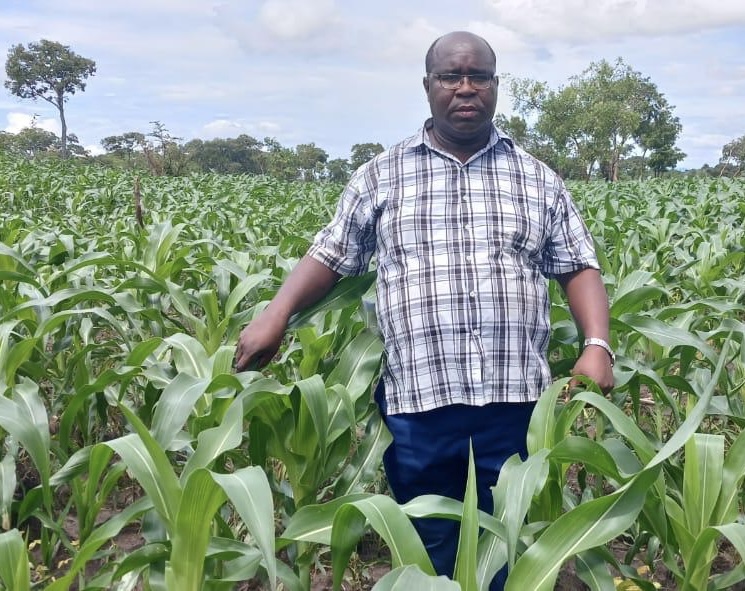
It is this yield level that has changed his fortunes. Until recently, maize yields were similar in Kenya and Tanzaia, according to the US Department of Agriculture information service, at around 700kg, or eight 90kg sacks, per acre, compared with Beda’s 2.16 tonnes today.
As well as the quality of seed, fertiliser and extension services have been critical in this high yield.
Beta uses 42 bags of fertiliser across his entire farm. Before Tanzania’s fertiliser subsidy programme, a 50kg bag of DAP cost about Tsh131,675, discouraging many farmers from using it. But now Beta spends half that, at Tsh60,000 to Tsh79,000 per bag.
“I started farming when the government implemented the subsidy. Also agricultural extension officer are in every province, making it easier to consult with them,” he said
Read also:
Digging in weeds ahead of planting lifts maize yields 40%
USAID launch project combating soil acidity to improve maize yields
Nigerian farmers get access to open-pollinated maize seeds increasing yields 66%
The price he gets per kg for his maize is typically lower than in Kenya, but he is far better off, and the lower prices are also driving up Tanzania’s maize exports, driving strong demand.
Brokers travel directly to Beda’s farm to buy maize for export. “I sell to the brokers at around tsh600 per kilo. They then export to countries like Sudan.”
This price is equivalent to around Sh3,100 a tonne, compared to the Sh3,000 to Sh4,300 per tonne paid to Kenyan farmers, but because he is producing three times as much per acre, he is far better off.
His main challenge, he said, is now delayed payment by brokers, which mean he is currently only planting one harvest per year, as he gets stalled on the cash to buy new inputs.
Are you a farmer looking to grow the most profitable crop on your farm, with or without irrigation. Use FarmBizAfrica’s HarvestMAX on https://harvestmax.farmbizapps.com and it will tell you in less than a minute what the highest income-earning crops are for your weather, soil type and this season, based on your seasonal weather forecast. Don’t make weather losses ever again, and more than triple your income.